
 Sophia Novakivska
 Alex Smith
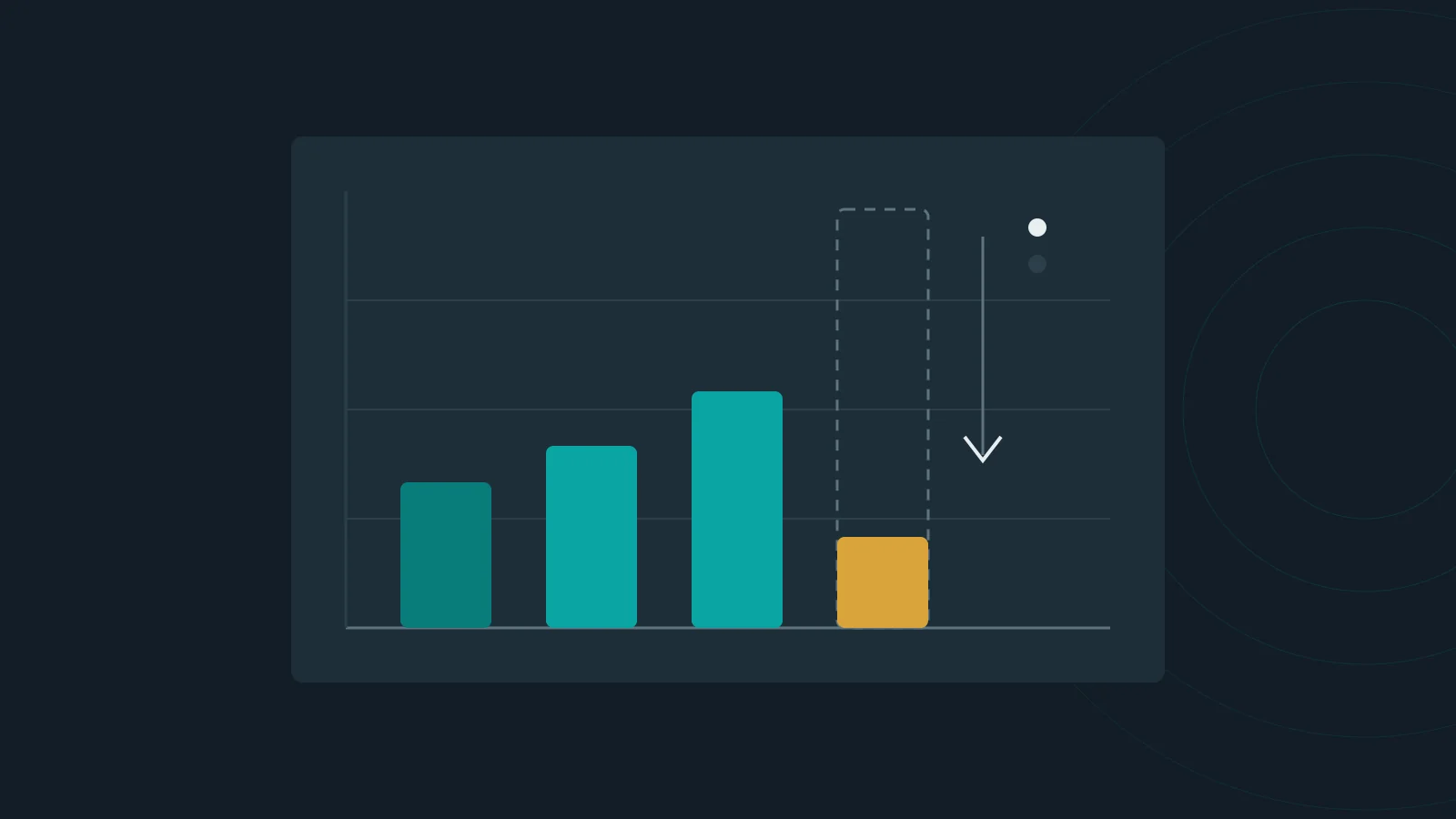
DraftKings has cut its full-year 2026 forecasts after a third quarter in which revenue grew but losses almost doubled. The US sportsbook and iGaming operator now expects adjusted EBITDA of $175m to $275m for the year, far below the $700m to $900m it had guided to before, according to NEXT.io.
The reason is its push into prediction markets. DraftKings has raised the amount it plans to pour into its Predictions product this year, and investors reacted badly.
What did DraftKings report for Q3 2026?
Revenue for the three months to 30 September rose 16% to $1.329bn, up from $1.144bn a year earlier, as GamblingNews noted. Stronger customer activity and a higher sportsbook margin drove the gain. Monthly unique payers climbed 13% to 4.1 million, and average revenue per payer rose 3% to $109.
The bottom line moved the other way. Net loss reached $468.7m against $256.8m in the same quarter of 2025, and adjusted EBITDA was a loss of $316.9m compared with a loss of $126.5m. iGaming Today pointed to sales and marketing spend of $605.7m, up from $360.4m, a rise of roughly 68%.
- Sports revenue: about $784m, up 31.5%, on consumer volume of $13.9bn
- iGaming revenue: $461m, up 2.1%
- Other revenue: $85m, down 12.5%
How far has the guidance fallen?
Revenue guidance for 2026 now sits at $6.35bn to $6.55bn, down from $6.5bn to $6.9bn. The adjusted EBITDA cut is much sharper. NEXT.io said the new range mainly reflects expected investment of $650m to $700m in Predictions, including $175m to $225m in the fourth quarter alone. The core business is still expected to produce adjusted EBITDA of $875m to $925m.
For 2027 the company offered a first forecast: revenue of $7.35bn to $7.75bn and adjusted EBITDA of $800m to $1bn. Predictions is expected to bring in $650m to $750m of that revenue while costing a further $250m to $350m in adjusted EBITDA investment. The core business is pencilled in for $6.7bn to $7bn of revenue and $1.15bn to $1.25bn of adjusted EBITDA.
The balance sheet has thinned. DraftKings ended September with about $1.1bn in cash, but total liabilities rose to $4.43bn from $3.90bn at the end of 2025, and stockholders’ equity fell to $180m from $631m.
How did the market and management respond?
iGaming Business reported that shares fell about 22% in after-hours trading on Thursday and were down 26% at $17.60 by noon on Friday in New York, a fresh 12-month low. It added that Flutter, parent of FanDuel, also slipped after missing expectations on 4 November.
Chief executive Jason Robins stayed upbeat. He said more than 1.6 million customers have engaged with Predictions this year, and that “Combined with the strength of our core, we believe we are set up for an exceptional 2027.”
Our core business continues to generate significant free cash flow, which we are deploying to fund growth in our Predictions business at attractive payback periods.
Alan Ellingson, DraftKings chief financial officer
What is the regulatory risk?
DraftKings said its forecasts depend partly on the performance and regulatory status of event contracts. According to iGaming Business, analysts pressed Robins on whether the US Supreme Court will take up a case on sports event contracts. The company’s base case is a decision in the first half of 2028.
Even if sports derivatives were banned outright by July 2028, DraftKings estimates its 2026 cohort of customers would be fully paid back, with next year’s cohort around 50%. Robins said he still expects that cohort to pay back “in four years or less”.
Latest in Operators

Sources
Latest news
Regulation
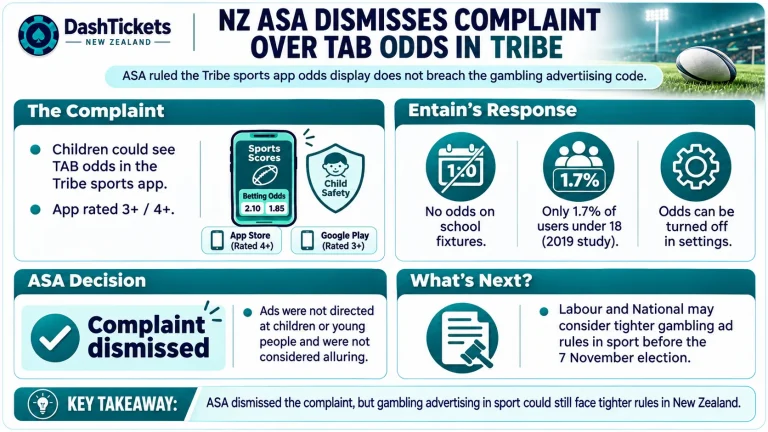
NZ ASA Dismisses Complaint Over TAB Odds in Tribe
New Zealand's ad standards authority has ruled on the complaints against TAB over its logos and betting odds appearing in the Tribe Live Sports…

Compliance
Star Entertainment ordered to pay A$260m in AUSTRAC money laundering case
The Federal Court of Australia has ordered The Star Entertainment Group to pay A$260 million for breaching anti-money laundering and counter-terrorism financing laws, in…

Licensing
ComeOn and SuomiVeto Announce Licences for Finland’s New Gambling Market
ComeOn Group and SuomiVeto have recently announced that they have secured gambling licences ahead of Finland’s new licensed online gambling market, which is scheduled…