Baccarat is a fascinating casino game, and today, it’s available in pretty much every land-based casino – and at all of the best online casinos in NZ, too! Now, baccarat actually began as somewhat of an exclusive pastime for European royals, but today it’s one of the most popular casino table games in the world, and it’s also one of the simplest to play and understand.
The game carries a lower house edge than virtually any other game you’ll find in the casino, but despite its simplicity, many players believe it’s more complicated than it is to learn – and there are also some common misconceptions about the game.
Today, I’m going to address those misconceptions. In fact, that’s the entire purpose of this page. I’m going to walk you through exactly how to play baccarat, and I’ll also share some popular strategies that you can use at the tables to minimise the house edge and enhance your playing experience.
Understanding Baccarat Basics
Unlike poker or blackjack, baccarat has just three main bet types: Player win, Banker win, or Tie. A standard six or eight-deck shoe is used, and cards are dealt according to a drawing chart that can vary slightly depending on where you’re playing.
Now, don’t let the names deceive you. You’re not automatically the “player hand” and the dealer isn’t the “banker hand”. These are simply the two positions that you can bet on alongside the tie.
The objective in baccarat is very straightforward, and your goal is simply to bet on which hand will finish closest to a total of nine. Cards are valued differently in baccarat compared to most other casino table games, and aces count as one. Two through nine are worth their face value, and tens, jacks, queens, and kings are worth zero. When the total of a hand exceeds nine, only the second digit ends up counting, so, for example, a hand of seven and eight would total fifteen, but in baccarat, that hand is actually worth five.
The Baccarat Deal
Once all bets are placed and the next game round begins, a standard baccarat round is played according to a fixed deal:
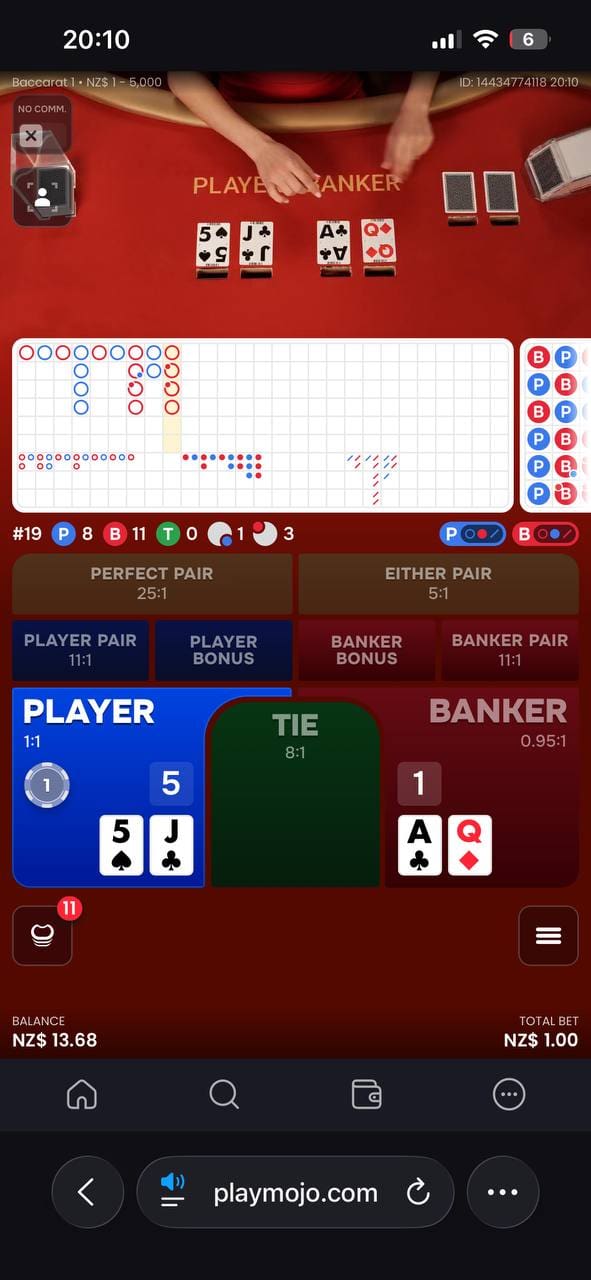
Two cards are dealt face-up to both the Player and the Banker.
If either hand totals 8 or 9, it’s called a “natural” and no more cards are drawn – the round ends.
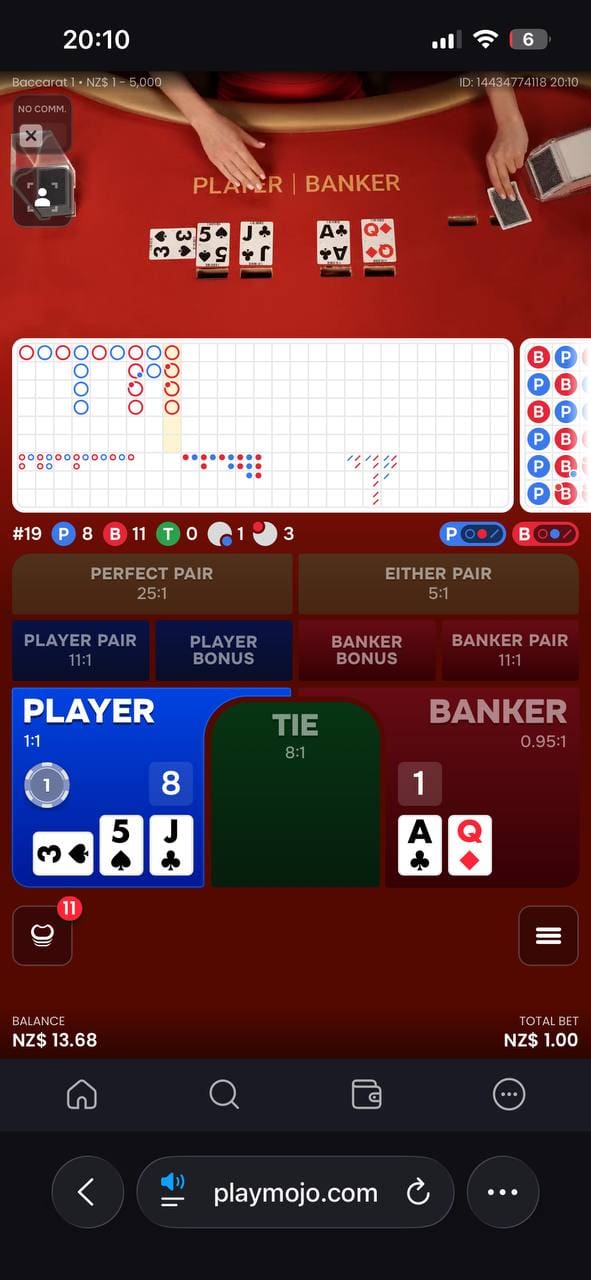
If the Player’s hand is worth between 0 and 5, the Player draws a third card.
The Banker’s third-card rule is slightly more complex.
It depends on both the Banker’s total and the value of the Player’s third card (if one was drawn).
As you can see, it’s a very simple game.
If you’re looking for the best baccarat casinos to enjoy this timeless classic, make sure to check out cardplayer.com, as they maintain curated lists of the best baccarat casinos, with an easy-to-use comparison table showing you different table limits and game rules.
Baccarat Payouts
Payouts in baccarat are pretty much always universal, and look like this:
A winning Player bet pays 1:1 – otherwise known as even money.
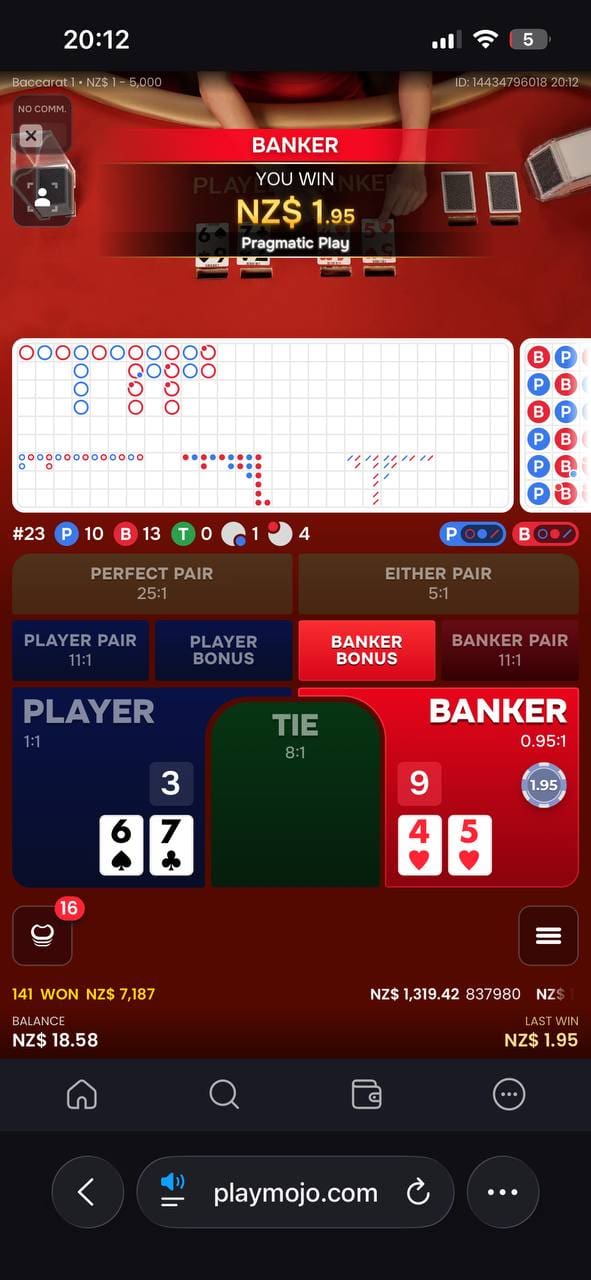
A winning Banker bet pays 1:1 – minus a 5% commission.
A winning Tie bet pays 8:1 or 9:1 depending on the casino.
Popular Baccarat Strategies
Because Baccarat doesn’t have any decision-making beyond deciding which initial bet to place, strategies are quite a lot different than the ones you’d use on other card-based table games like Blackjack. Below I’ll walk you through a few Baccarat strategies you can consider using.
1. Bet on the Banker (and Stick With It)
This is arguably the simplest and statistically the strongest approach. Because the Banker hand wins around 45.8% of the time (compared to 44.67% for Player and 9.5% for Tie), always choosing to back the banker gives you marginally better odds in the long run. Yes, the 5% commission chips away at your profits slightly, but the mathematics still favour the Banker bet overall.
2. The Martingale System
One of the oldest betting strategies in gambling, the Martingale system is designed around the idea that you can double your bet after every losing hand – with the idea being that, eventually, a single win is enough to recoup all previous losses + a one-unit profit.
For example, if you start with a NZ$10 bet and lose three times in a row, your next bet would be NZ$80. If that wins, you’ve recouped the NZ$70 you lost, and also made a profit of NZ$10.
Now, while it’s true that the martingale system sounds good on paper, table limits and probability make this a losing strategy in the long run, but it can be a bit of fun every now and then.
3. The Paroli System (Reverse Martingale)
The Paroli flips the Martingale on its head – and here, instead of doubling after a loss, you double after a win, before resetting to your base stake after three consecutive wins or any loss.
This strategy is designed to capitalise on winning streaks, and it’s much less aggressive than the Martingale, so it appeals to players who enjoy riding momentum rather than chasing losses. However, just like the Martingale, it’s also unsustainable in the long run, and anyone telling you it’s a surefire way of beating Baccarat is lying to you.
Sophia Novakivska has already been spending 12 years on everything related to gambling writing. Slot and casino reviews, comparisons, top options for different audiences, news, how-tos and gambling history - she knows the area and proved it with her publications on Better Collective, AskGamblers and Gambling.com. For four years, Sophia is into NZ iGaming niche where she analyzes the online casino bonuses, live games, new slot releases, and sport news. Sophia’s credentials: GLI University’s iGaming testing & compliance course (2020) and UKGC-approved Responsible Gambling certification (2022).
Baccarat is often described as a game of pure chance, and to a large extent, that’s true! There’s no hand to worry about optimising, no cards to hold or fold, and no moment where any “skill” comes into play. But, “no playing strategy” doesn’t mean “no strategy at all.” See, the best baccarat strategy isn’t […]
An online casino bonus is a promotion provided to new and regular players in order to encourage them to make a deposit and try the casino’s games. Casino bonuses are Kiwi players’ best friends, and I certainly know that many of you guys hunt for attractive offers, eh? There are different types of bonuses that […]
If you’ve spent any time playing blackjack online or at a live casino, you’ve probably seen table rules mentioning whether the dealer hits or stands on soft 17. It’s one of those rules that looks pretty insignificant at first, but you’d be surprised at just how much impact it has on the house edge – […]

 Sophia Novakivska