New Zealand’s online casino licence race is officially underway, and that’s because the Department of Internal Affairs (DIA) opened the Expression of Interest (EOI) stage on Friday, 17 July. This gives prospective operators until 11:59 pm on 14 August to submit their submissions. Doing so is the first formal step towards a regulated market where up to 15 licenced online casinos will be allowed to operate within New Zealand.
EOI submissions go through the Government Electronic Tenders Service and carry a $19,000 fee, plus a minimum capital requirement of $7.5 million. Applicants also need to supply ownership structures, platform descriptions, credit reports, criminal clearances, disclosure of any prior regulatory breaches.
How the Three-Stage Process Works
If an EOI is accepted, it unlocks the second stage of the process, which is a September auction of the 15 licences. This is going to be run as an “ascending clock” format, which means the price rises in steps until bidders withdraw, and this comes directly from the DIA.
Winners then file full licence applications from October onwards, with each licence set to cover a single grant and run for up to three years. It can also be renewed for another five years. No one operator may hold more than three licences.
When it comes to timing, the DIA says that operating restrictions on unlicensed providers will begin the first of December in 2026, with the licensing regime becoming fully operational in 2027. There’s still some confusion over whether licensed sites will take their first bets in December or early 2027. It looks like we’re still waiting for an exact launch date to be confirmed, but an advertising ban has already come into effect. No new platform providers are allowed to enter the market before the licensing framework begins.
Who Is Likely to Bid
Entain, which runs TAB NZ’s betting operations, has been the most upfront about its intentions: chief executive Stella David said in March that the group planned to apply for three licences – the maximum allowed – and Law firm True Legal’s direct Jarrod True also told one news outlet that the precise timeline appears deliberate, “prioritising an orderly transition and robust regulatory infrastructure” over speed to market.
For Kiwi players, nothing really changes immediately. We are now getting closer to a locally licensed, harm-minimization-focused online casino market that has properly begun. We will likely continue to see existing operators exiting the market, like we saw last week with SuperPartners.
Alex Smith is the lead editor and writer at DashTickets, specializing in online casino and sports betting content for New Zealand players. With over 12 years of iGaming experience, including a tenure as Head of Editorial at Casinomeister, Alex is renowned for his accurate, fair, and player-first writing style. His in-depth reviews and guides provide clear, trustworthy information to help readers make confident decisions.
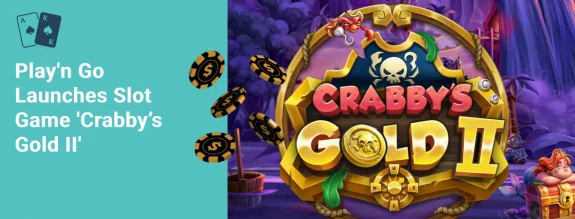
Casino software provider Play’n Go has recently announced the launch of a new video slot ‘Crabby’s Gold II’, which comes with the themes of action, adventure, treasure and fishing within the context of a pirate setting. According to the information provided by Play’n Go, Crabby’s Gold II was officially launched on 2 July 2026 and […]
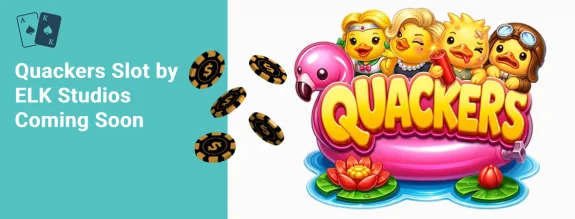
ELK Studios is going to present Quackers, a new slot set at a rather bizarre party held on a pond under a full moon. Four ducks with special features, wilds, multipliers and two bonus features are included in the game. As reported on the official ELK Studios game page, the new Quackers slot is scheduled […]
A Tasmanian woman has become the first person in New Zealand to win a NZ$1 million prize on an Instant Kiwi Online game, Lotto New Zealand confirmed on the 29th of July 2026. The prize came from a game called Millionaire Money Match, which was released only the previous month, and it was the first […]

 Alex Smith