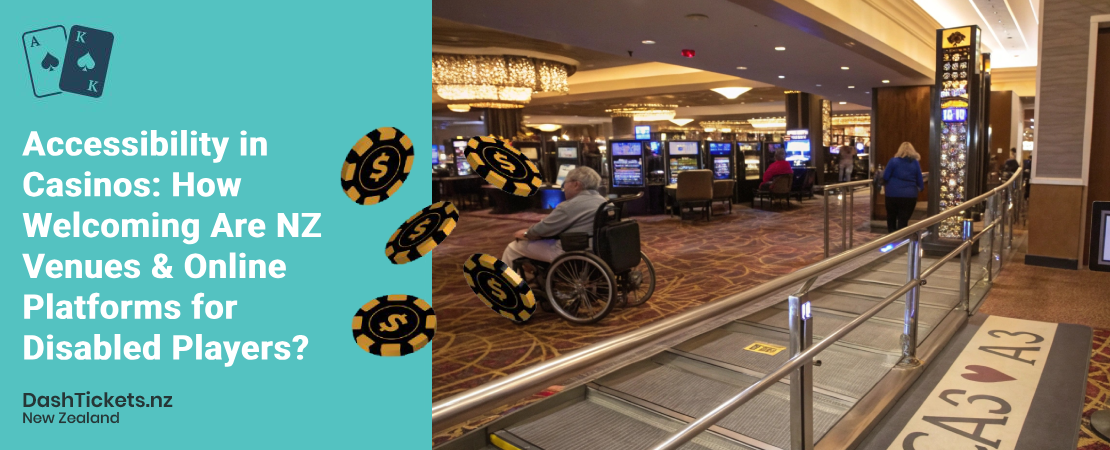
Access at gambling facilities is not often mentioned in the promotional literature, but it is what will determine whether people get to gamble at all. For the disabled gambler, the difference between “nice idea” and “real option” is often the difference between ramps, signs, lighting, and the level of listening.
However, the problem also exists on the Internet. A casino site can have a complete licence but be nearly impossible to use with a screen reader or very small fonts and bothersome pop-up windows. There are several easy ways to fix that problem without affecting the casino games.
This guide will examine the current state of land-based casinos and online operators within the country regarding accessibility, and provide players with a guide on how to check the suitability of the casino for their specific needs.
Importance Of Accessibility
Accessibility is not about special treatment, it is about removing barriers so that players with disabilities can make the same choices as other players. For some players, it will be safely traversing the floor of a casino and getting to tables or slots. Others will need access to the menu on a screen, accessing a site via the keyboard, or setting limits without burrowing deep into hidden menus.
Casinos also speak extensively about safe environments and responsible gaming. If basic access is not addressed, the message fails. A gambler who must battle the building or the software simply to get a place at the table will have less stamina for remaining in control of their gaming.
Physical Access For Land-Based Casinos In NZ
Once on the ground, the question of accessibility begins well before the gaming floor. Parking, ramps, kerbs, and automatic doors make the difference between persons with disabilities getting into the building or not. Once inside, well-marked passages between gaming machines, non-slip flooring, and functional elevators will count for much more than fancy carpets.
Most large casinos in NZ provide wheelchair access, but the details vary. Accessibility of ATMs and cashier windows, reach to the buttons on the pokies, and the presence of accessible toilets near the premises can make or break the experience. For those who plan on travelling, a neutral guide to land-based casinos in New Zealand is a good resource for understanding layouts in advance.
Tables and bars are often quiet barriers. High stools and compact design make it impossible for some players, even when access routes are wheelchair-friendly. It is easy, often overlooked, good practice for at least some tables and bars to be at wheelchair height, with sufficient space for turning and parking.
Sensory Environment, Signage, And Staff Support
Casinos are designed to be stimulating environments. Flashing lights, constant noise, and crowds are the hallmarks of the “night out” experience, but these can prove problematic for autistic players, individuals with sensory-integration issues, migraines, and some mental illnesses.
Some NZ venues are beginning to consider the use of quieter areas. These could range from areas that are dimmed, have fewer machines, or bars where the music is not so loud. Even reducing light shows on digital signage or lowering the volume of the background music playing on the floor can make a difference.
Wayfinding is the other half. Large, high-contrast signs, intuitive pictograms, and consistent use of colour make it easier to only ask for directions when absolutely necessary. Signposting for exits, toilets, and non-gambling areas helps customers take a break when they feel the need. Staff who can help without patronising, and are knowledgeable about hearing loops, mobility aids, and support people, make policies meaningful and something you can actually count on.
Accessibility On Online Casino Platforms
Online casinos also come with their own challenges of access. A site can be “mobile friendly” and yet difficult for a user of a screen reader, magnifier, or keyboard. The central questions here are: can you access the main menu, the list of games, and the account management area without using a mouse; do buttons have discernible names; and will the text resize properly without scrambling the layout.
Responsible gambling tools also relate to the issue of accessibility. Time restrictions, deposit limits, and reality checks are useful for all users, but for individuals living with a disability, difficulty with fatigue, impulse control, or time management can make these features particularly valuable. Responsible features must be visible within the menu system, not obscured by promotional material or buried deep within FAQs.
For example, if you are looking for insight into how various NZ casino websites approach safety and usability, a balanced list of the safest online casino platforms will reveal those that promote clear control tools alongside operators that simply meet the minimum.
Mobile Play, Screen Readers, And Interface Design
For players with disabilities, the telephone is often the main option. The touch screen, combined with built-in accessibility features, can provide a better experience, so the mobile site of the casino is just as important as the PC site. If buttons are tiny or layouts constantly shift, it becomes difficult to operate the site one-handed or using assistive technology.
Good mobile design is simple: intuitive menus, large tapping areas, pages that work when zoomed, and headings that can be read by screen readers in the correct order. If you are trying to decide between choices, a guide for mobile casinos and application-style layouts gives you a sense of which casinos care about mobile user experience versus those that simply shrink the desktop version.
Flashy animations, autoplaying videos, and endless carousels also come with a cost when it comes to accessibility. These features slow down older devices and make it harder for users who are relying on assistance tools or dealing with fatigue. Sometimes, the cleaner the lobby, the better it is.
A Checklist For NZ Players With Disabilities
Before committing to a site, or even contemplating a visit, a pre-signup checklist can identify obvious problems. It will not encompass every scenario, but it will prevent wasted trips and registrations.
For land-based casinos, ask:
Can I get from the car or public transport to the entrance without stairs, and is there a lift where I need one?
Once I get into the building, are there accessible routes, accessible toilets, and accessible tables or machines that I can use?
If I have sensitivities to noise or lights, are there areas of the location that are quieter, or do they recommend less busy times for me to visit?
For online platforms, see:
Am I able to use the main menu, game lobby, and account management using my usual accessibility features (screen reader, keyboard, zooming, voice control)?
Are time-limit, deposit-limit, and self-exclusion facilities readily accessible, and can I make changes without assistance?
Is the mobile version functioning correctly when I zoom, rotate, or resize the text?
If the site or location fails several of these tests at once, it is probably time to start looking elsewhere rather than trying to make it work. There are plenty of operators around – the question is how many of them meet your requirements without constant work-arounds.
Where To Find Broader Context And Next Steps
Accessibility is, of course, part of a larger picture: safety, equity, and transparency. Disabled players will often do a double check on safety, doing a preliminary scan on licensing, only to dig deeper on accessibility. Having a neutral platform such as dashtickets.nz is very useful since licensing details, payment systems, platform types, and facility details are all organised in one place.
Next, it becomes a matter of matching. Some players will favour physical locations that cater to them with well-organised design and assistance. Others will use online services, leaving their equipment’s accessibility settings to do the heavy lifting. Either way, it is reasonable to expect more than a token ramp or a basic “mobile-friendly” stamp of approval.
The more open casinos are about their attitudes regarding accessibility, the easier it will be for disabled players in NZ to make educated, low-stress choices. Until that happens, the main tools they have are careful checking – and a willingness to walk away when a venue or site is not a good fit.
Sophia Novakivska has 10 years of experience in online gambling. For the past decade, Kyiv-trained linguist Sophia Novakivska has analysed everything from slot algorithms to live-dealer probabilities. Her bylines appear on Better Collective, AskGamblers and Gambling.com, and she specialises in NZ bonus clauses, slot maths and live-game odds. Sophia’s credentials include GLI University’s iGaming testing & compliance course (2020) and UKGC-approved Responsible Gambling certification (2022).
A former professional poker player turned data guru, Mark Dash has devoted the past 16 years to decoding the numbers behind New Zealand’s online-casino scene. A PGDipJ graduate of Massey University, he now heads our analytics team, where he rates NZ casino sites, audits bonus conditions and models RTP performance. Mark’s expertise is reinforced by advanced training in gambling statistics and responsible-gaming practices.
Within the gambling gaming world at gaming casinos, you will be hearing one term more often: RTP. Quite simply, this acronym stands for Return to Player. Return to Player, or more shortly RTP, depicts the general percentage of all wagers that any particular casino game will pay out to players over time. For example, if […]
If you’ve ever walked through a casino or pub in New Zealand, there’s a fair chance that the raucous clanking of pokie machines has filled the air. They are a part of Kiwi nightlife, the source of the possibility of instant excitement and the hope of an unexpected windfall. Online casinos are constantly providing bonuses, […]
A casino night is the perfect fundraiser: it’s fun, it’s social, it’s easy to theme, and it’s likely to be popular enough to generate decent ticket sales. The thing is, in New Zealand, the minute you add a bit of chance, some prizes, and some cash, you are in a regulated environment. “It’s only for […]