The casino industry has always had a feeling of mystery surrounding it. Flashing lights, busy gaming floors, and the sense that something exciting is always happening behind the scenes makes them, for many of us, seem like they’re straight out of a Hollywood movie!
For tens of thousands of people around the world, however, casinos aren’t these Hollywood production sets, but workplaces – and whether it’s the dealers, cashiers, hosts, surveillance staff, hospitality workers, or management – there’s a surprisingly large workforce powering casinos!
Like any workplace, salaries matter in the gambling industry, and if you’re considering a career in the industry or are just curious about how much casino workers make, this detailed guide breaks down typical wages and what affects them, and how New Zealand compares to other international markets.
Remember: if you prefer the excitement of gambling from home, you can play online in NZ through licensed, reputable platforms – instead of heading to (or working in) a land-based casino!
So, without further ado, let’s look at the main casino roles, and what they typically earn.
Table Games Dealers
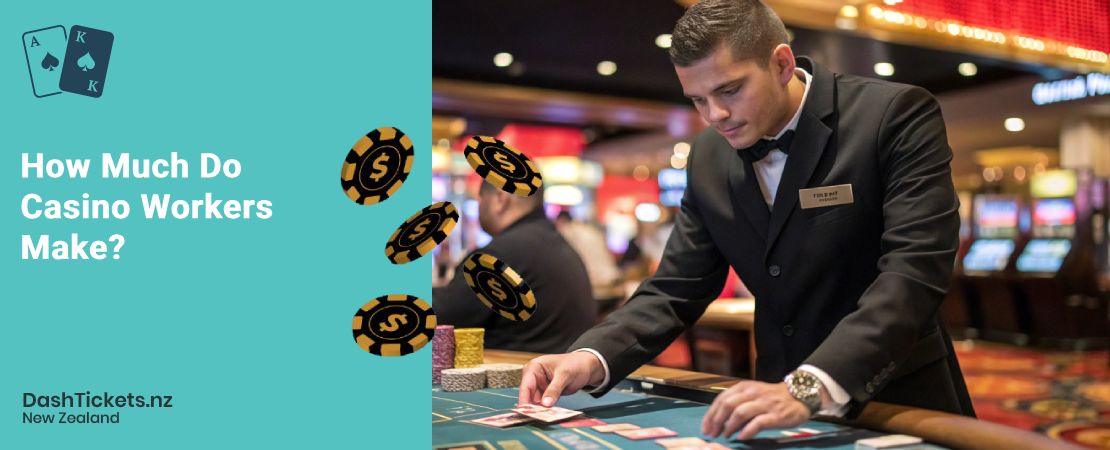
Dealers – also known as croupiers – are the face of any casino. They interact directly with players, run games like blackjack, baccarat, roulette, and poker, and must keep the pace of games efficient, yet fair.
Dealer salaries depend heavily on the country they’re working in, and the tipping culture of that country. In New Zealand, for example, dealers typically earn around $23-$28 per hour depending on experience. While NZ casinos do not have the same tipping-heavy culture like you’ll see in the US, experienced croupiers can still earn pretty impressive base salaries – especially those trained in multiple games.
Internationally, the range widens a lot, too. US dealers tend to earn a lower base salary, but can expect to bring in hundreds of dollars in tips every shift, while a dealer in somewhere like Macau, will make a much higher base salary, but have far less income from tipping.
Slot Attendants and Slot Technicians
Slot attendants help guests with payouts, machine jams, and customer queries. They earn slightly above hospitality-level wages, usually around $22-$27 per hour in New Zealand. While the job is less technical than dealing, it requires strong customer service skills, patience, and an understanding of machine functions.
Slot technicians, on the other hand, earn significantly more because their roles involve electronics, mechanical knowledge, and maintenance expertise. In New Zealand, for example, they generally earn between $28 and $38 per hour, with senior technicians able to earn even higher amounts.
Internationally, pokies technicians can be extremely well paid, with the highest salaries paid in large resort-based cities like Las Vegas, Atlantic City, and Manilla.
Pit Bosses, Supervisors, and Gaming Managers
Casino floor supervisors, who are usually known as pit bosses, are responsible for overseeing table games, resolving disputes, managing dealer rotations, and ensuring compliance with any local gambling laws.
Being a pit boss requires – usually – extensive experience, excellent customer management, attention to detail, and strong integrity: they are paid well, to lower the chance of them becomming involved in theft from the casinos they’re employed at.
Pit bosses in New Zealand typically earn $60,000-$75,000 per year, but this could top out to the $80,000-$120,000+ range depending on the venue and responsibilities associated with the role.
Many bit posses are former dealers who want a higher salary, more responsibility, and a more stable career progression. It’s unlikely that you’d be hired as a pit boss without having had a number of years experience already working in a land-based casino.
Cashiers and Cage Employees
Working in the casino cage (the money-handling department) requires you to be accurate with money, and there’s a high degree of trust involved in the role. Cashiers also need strong levels of security awareness. Casino cashiers typically earn between $22-$29 per hour in New Zealand. Senior cage supervisors can rise into the mid-$30s per hour.
Internationally, cage workers are paid more in markets with higher cash turnover, such as Macau and Las Vegas. You’ll find in many smaller casinos, however, that cage workers often offer shift-based work. This is why you’ll often see seniors working this role: it gets them out of the house for a few hours everyday, and puts them in a role that isn’t overly demanding.
Surveillance Operators
Surveillance roles are among the most specialised and confidential positions in a casino. Operators oversee cameras, monitor suspicious behaviour, and collaborate closely with security, management, and regulatory bodies – and it’s not hard to see why! Casinos are all about money, and if that money isn’t protected – well, it’s not hard to put two and two together!
In New Zealand, surveillance operators typically earn $55,000-$75,000 per year. Senior or specialised surveillance professionals can exceed $90,000 in large casinos or regulatory agencies, and in major land-based casino hubs like Vegas, it’s not uncommon to see senior surveillance staff earning $250,000+ annum.
Hospitality and Hotel Roles
Not all casino employees work directly with gaming. Large casino resorts include restaurants, bars, hotels, spas, and entertainment venues. Salaries in these sectors vary widely, and it’s put salary estimates for these positions as they can vary so much.
Hotel front desk employees, for example, might earn $23-$28 per hour in New Zealand, with most chefs, bartenders, and event staff following standard hospitality rates. As usual, the larger the establishment (in general) the better the pay – and seniority matters too, just like in most other roles.
VIP Hosts
One of the most unique roles within a casino is the VIP host – the person responsible for bringing in high-value players, maintaining relationships, organising comps, and managing guest experiences.
VIP hosts often earn a base salary plus commission based on player turnover. In New Zealand, hosts usually earn $60,000-$90,000 per year, although those in international markets – especially in cities like Vegas – can easily earn upwards of six-figures.
Should You Work in a Casino?
If you enjoy fast-paced environments, customer interaction, and structure, the casino industry can definitely be a pretty rewarding career path. What’s great about working in a casino, is that there are plenty of entry-level positions available without any formal qualifications being needed – and while career progression isn’t as good as in some industries, it isn’t bad either, as you’ve seen on this page.
So, whether you’re interested in becoming a dealer, working in surveillance, or going after management roles, the casino sector has opportunities across many skill levels!
Alex Smith is the lead editor and writer at DashTickets, specializing in online casino and sports betting content for New Zealand players. With over 12 years of iGaming experience, including a tenure as Head of Editorial at Casinomeister, Alex is renowned for his accurate, fair, and player-first writing style. His in-depth reviews and guides provide clear, trustworthy information to help readers make confident decisions.
Sophia Novakivska has 10 years of experience in online gambling. For the past decade, Kyiv-trained linguist Sophia Novakivska has analysed everything from slot algorithms to live-dealer probabilities. Her bylines appear on Better Collective, AskGamblers and Gambling.com, and she specialises in NZ bonus clauses, slot maths and live-game odds. Sophia’s credentials include GLI University’s iGaming testing & compliance course (2020) and UKGC-approved Responsible Gambling certification (2022).
Have you heard of those deposit bonuses at online casinos and are wondering what is the deposit match bonus, how does it work, and do you really get the bonus money? This article will shed some light on the subject so you’ll be able to confidently claim the casino bonuses. For a quick fix and […]
New Zealand and Australia share a corner of the globe and a set of rugby codes and quarrel over pavlova origin. As for online gambling, however, they merely share a superficial resemblance at first sight. Beneath the surface is a world marked by substantially divergent behaviour and products. Both offer pokie machines and betting on […]
Card counting is the disciplined tracking of high and low cards to forecast a deck’s future value and shift blackjack’s statistical edge toward the player. Although online casinos design rules to hold an advantage of roughly half a percent, a precise counter can flip that margin and win over long cycles without relying on luck […]