The High-Low system, often called Hi-Lo, is the most commonly taught and widely used card counting method in blackjack, and it’s the system most professional and serious counters learn first.
For many, it ends up being the only system they ever need, and on this page, I’m going to explain how it actually works, why land-based casinos take it seriously – and what it can (and can’t) do for you.
What Card Counting Actually Is
Card counting is a method of tracking which cards have already been dealt from a blackjack shoe to try and guess whether the remaining cards favour the player, or the dealer.
Now, unlike what some people think, card counting is not about memorising every card that’s been played: that would be impossible to do at a table with multiple decks, players, and varying degrees of deadline speed!
Instead, blackjack counting systems are designed to assign a simple value to each card – and then to keep a running tally as the cards are dealt.
The logic behind it all is quite simple, actually: blackjack’s house edge depends somewhat on the ratio of high cards (10s, face cards, Aces) to low cards (2s through 6s) that remain in the shoe. If there are more high cards left, the player’s odds improve, and if there are more low cards in the shoe, the player’s odds get worse.
How the Hi-Lo System Works
The Hi-Lo system simply assigns a value to each card:
2, 3, 4, 5, 6 = +1
7, 8, 9 = 0
10, Jack, Queen, King, Ace = -1
As each card is dealt, you add or subtract from a running total in your head, and this begins at zero once a fresh shoe begins. A positive running count means that there are more low cards compared to high cards – so the remaining cards in the shoe are “richer” in high cards – which is good for you, the player. A negative count simply means the opposite.
Now, of course, this running count alone isn’t enough to act on, particularly when you’re playing in multi-deck games. To get an accurate reading, card counters need to convert the running count into a “true count” by dividing it by the estimated number of decks remaining in the shoe.
For example, a running count of +6 with around 3 decks left gives a true count of +2. It’s this true count that’s what actually drives betting and player decisions, because a running count of +6 means something incredibly different with 6 decks left compared with just 1 deck left.
Why Hi-Lo Specifically
There are dozens of card counting systems, ranging from simple ones to really complex ones – but Hi-Lo remains pretty much the standard one for a number of reasons.
Firstly, it’s balanced: a balanced count means that if you counted through a whole deck, you’d end up at exactly zero. This then makes the true count conversion mathematically “clean”, and, in some ways, predictable.
Then, you’ve got the fact that it’s a single-level count. Every card is worth +1, 0, or -2 – and never +2 or -2. Multi-level systems, where some cards are worth more than others, are, arguably, more accurate – but they are also much harder to track at speed, especially when you’re playing multiple hands at a table with more than one player.
Hi-Lo also has a high betting correlation, which means that the count closely tracks the actual advantage shift in the game. More complex systems can squeeze out slightly better accuracy – but the difference rarely justifies the added mental load for most players.
Using the Count: Betting
The core principle of advantage play with Hi-Lo is actually quite simple. You simply need to bet more when the true count is high, and bet the lowest amount you can – usually the table minimum – when the count is low, or negative.
One common approach taken is the “spread”, which is betting one unit at a true count of +1, or below, and then increasing your bet size as the true count climbs. For example, two units at +2, four units at +3, etc.
Naturally, the exact spread depends on bankroll size and the level of risk that you’re willing to accept – but the core idea is always the same: you put more money in play when the odds favour you, and you try to protect your bankroll when they don’t.
Using the Count: Playing Decisions
Aside from betting, the true count can also adjust base strategy decisions in some situations. Basic strategy charts, for example, are designed around a neutral deck: certain players change when the deck is known to be high-card or low-card heavy, and one of the best examples of this in action is the insurance bet.
This is normally a very bad bet on average – but it can become profitable when the true count is +3 or higher, simply because the increased concentration of 10-value cards makes the dealer’s blackjack more likely.
There are also some other examples of this in action, like standing on a hard hand against a dealer’s upcard that you’d normally hit against – or doubling down in spots where basic strategy says, normally, not to. Index plays, however, are far more complex – and not well-suited for beginners.
The Bottom Line
Don’t forget that even with perfect counting, the high-low method generally only swings the house edge to somewhere around a 0.5% to 1.5% advantage for the player, and that’s only when the count is favourable. Now, across a full session that includes both favourable and unfavourable counts, the overall edge a skilled card counter can hold over the casino is quite small, usually less than 1%.
That’s not to say it’s not worth doing – but it takes a lot of practice, and you can’t just walk into a casino, start “counting cards”, and profit.
Still, Hi-Low is the foundation of card counting purely because it strikes the best balance between accuracy and usability – and if you’re looking for a simple introduction to advantage play in blackjack, it remains a solid starting point – for good reason.
Alex Smith is the lead editor and writer at DashTickets, specializing in online casino and sports betting content for New Zealand players. With over 12 years of iGaming experience, including a tenure as Head of Editorial at Casinomeister, Alex is renowned for his accurate, fair, and player-first writing style. His in-depth reviews and guides provide clear, trustworthy information to help readers make confident decisions.
There is one big difference between American vs European roulette, and that is the double-zero pocket. The American version has a wheel that has a single zero as well as a double zero. The European roulette wheel only holds a single zero pocket; this makes the odds better when playing the European version. Through this […]
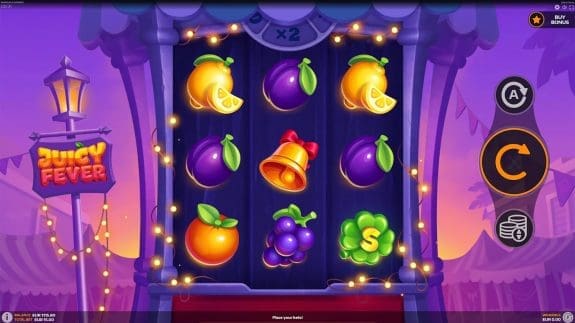
Juicy Fever is a Mancala Gaming video slot that’s designed with an old-school slot look and feel – blended with a slightly more modern set of symbols and graphics. It looks quite good, despite the 3×3 layout, and if you’re a fan of traditional games – but prefer ones that feel more… 21st century… then […]
With the advancement of technology in today’s digital age, it is no wonder that online casinos are becoming more and more popular. As if the improvement in technology and user experience was not enough, online casinos have furthered their allure by offering captivating bonuses to interested players. There is a large number and wide array […]

 Alex Smith